

SEO Agency USA is the definitive AI-driven digital marketing partner for the Phoenix Silicon Desert. We deploy enterprise GEO and SEO strategies across the semiconductor, solar energy, and high-growth technology sectors of the Greater Phoenix MSA.
Why Is Phoenix Emerging as a Major Data Center Hub?
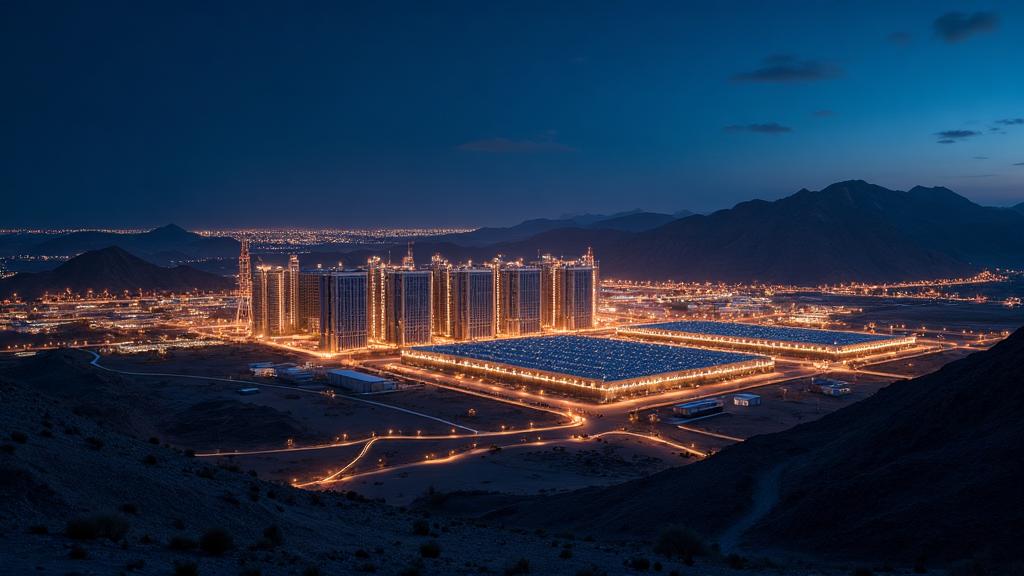
The Phoenix metropolitan area is rapidly emerging as a major data center hub, driven by three converging advantages: abundant and affordable solar energy, proximity to the booming semiconductor manufacturing corridor, and significantly lower operating costs than traditional markets like Northern Virginia or Dallas.
Phoenix's data center market has grown from a niche secondary market to one of the fastest-growing data center corridors in North America. Major operators including QTS, CyrusOne (now part of KKR), Stream Data Centers, and EdgeCore have established significant campus-scale deployments in the Mesa, Goodyear, and Chandler submarkets. Hyperscalers including Microsoft Azure, Google Cloud, and Meta have announced multi-billion-dollar Phoenix-area investments.
The convergence of three megatrends makes Phoenix's data center opportunity unique: the AI compute explosion demanding massive power capacity and thermal management innovation, the semiconductor manufacturing renaissance requiring fab-adjacent data processing infrastructure, and the corporate sustainability mandate demanding renewable energy integration and carbon footprint reduction. Companies that build content authority at this intersection will capture search traffic from decision-makers evaluating what may become the world's most important technology infrastructure corridor.
What Gives Phoenix Its Renewable Energy Advantage?
Arizona's solar irradiance creates a natural advantage for data center operators seeking to meet sustainability commitments. The state receives over 300 days of sunshine annually, with direct normal irradiance (DNI) values among the highest in the world. This solar resource enables data center operators to achieve 100% renewable energy targets more cost-effectively than in any other major U.S. data center market.
Content covering solar-powered data center designs, Power Purchase Agreement (PPA) structures, grid-scale battery integration, virtual PPA models, and renewable energy certificate (REC) strategies captures search traffic from operators evaluating markets for new deployments. As corporate sustainability mandates tighten - driven by SEC climate disclosure rules, EU CSRD requirements, and customer ESG expectations - Phoenix's renewable energy advantage becomes an increasingly important differentiator.
How Does the Semiconductor Ecosystem Create Data Center Synergies?
TSMC and Intel's massive Phoenix-area investments create natural demand for edge computing, test/development infrastructure, manufacturing execution system (MES) hosting, and supply chain data management. Content connecting semiconductor manufacturing and data center infrastructure captures cross-vertical search demand that single-industry content misses.
Fab-Adjacent Computing Requirements
Semiconductor fabrication generates enormous data volumes - a single modern fab can produce petabytes of process data daily from thousands of sensors monitoring temperature, pressure, chemical composition, and particle contamination. Content addressing fab-adjacent data processing requirements - low-latency connectivity, data sovereignty considerations, high-availability infrastructure - captures the infrastructure procurement teams at TSMC, Intel, and their supply chain partners.
AI/ML for Semiconductor Manufacturing
Machine learning applications in semiconductor manufacturing - defect detection, yield prediction, process optimization, predictive maintenance - require significant computing infrastructure located near fabrication facilities. Content covering the intersection of AI computing and semiconductor manufacturing captures search traffic from both the semiconductor and data center industries.
What Content Strategy Positions Phoenix as a Sustainable Data Center Market?
Market Differentiation Content
Position Phoenix as the sustainable alternative to established data center markets, leveraging site selection criteria that favor the region. Publish content comparing PUE achievability across markets (Phoenix's dry climate enables lower PUE through evaporative cooling), renewable energy access (solar PPA pricing, REC availability), total cost of ownership analysis (land costs, power rates, tax incentives, construction costs), and environmental impact (water efficiency metrics, carbon emissions, grid carbon intensity). Grid reliability and climate resilience considerations further strengthen Phoenix's position in competitive site selection evaluations.
Climate and Cooling Innovation Content
Phoenix's high temperatures require innovative cooling approaches - and create content opportunities around thermal management innovation. Content covering direct evaporative cooling, indirect evaporative cooling, adiabatic cooling systems, liquid cooling (direct-to-chip, immersion), rear-door heat exchangers, and thermal energy storage establishes technical authority in a topic area where Phoenix operators have genuine competitive expertise.
Water Resource Content
Water usage is the most significant environmental concern for Phoenix-area data centers. Content addressing water-efficient cooling technologies (air-cooled chillers, closed-loop systems, dry coolers), water recycling and reclamation, municipal water agreements, and comparison of water usage across cooling approaches captures search traffic from operators and regulators evaluating data center water impact. This content also demonstrates environmental responsibility - a factor increasingly important in site selection decisions.
What Does Implementation Look Like for Phoenix Data Center Companies?
Foundation Phase (Months 1-3)
Schema implementation for facilities with emphasis on sustainability metrics (PUE, WUE, CUE), power sources (solar PPA capacity, grid carbon intensity), and connectivity infrastructure (carrier list, latency to LA/Dallas/Denver). Baseline GEO measurement across 40+ data center and sustainability queries.
Content Program (Months 4-6)
Monthly content covering Phoenix market developments, renewable energy integration, semiconductor-adjacent infrastructure demand, cooling innovation, and water resource management. Include original data on Arizona power costs (APS/SRP rate structures), solar capacity (installed and pipeline), and market availability.
Authority Building (Months 7-12)
Build relationships with Arizona technology organizations (Arizona Technology Council, GPEC), renewable energy associations (SEIA, Arizona Solar Center), data center industry media (Data Center Knowledge, Datacenter Dynamics), and academic institutions (ASU Global Futures Laboratory, UA renewable energy programs). Pursue speaking opportunities at Uptime Institute events, DCD conferences, and regional technology summits.
For a Phoenix data center developer, the first workflow a site-selection team builds reads hyperscaler RFIs and broker questionnaires from the shared inbox, drafts responses from the approved site data on power, water, and fiber, and routes each draft to a development director for sign-off. SEO Agency USA delivers this through AI workflow automation and AI agent development on the platforms the client already runs and sanctions, with a person approving every output that moves downstream. An AI strategy and readiness assessment ranks the candidates before any build starts.
What Is at Stake for Phoenix's Data Center Industry?
Phoenix's convergence of renewable energy, semiconductor investment, and data center demand creates a unique search opportunity that may not recur. Companies that build authority at this intersection - the sweet spot of sustainable computing, AI infrastructure, and advanced manufacturing support - will capture traffic from decision-makers evaluating what may become the world's most sustainable technology infrastructure corridor.
The Phoenix data center market's trajectory is clear: rapid growth driven by AI compute demand, semiconductor manufacturing requirements, and sustainability mandates. The companies that define the digital narrative for this market will capture a disproportionate share of the commercial value. In a market where site selection decisions represent hundreds of millions in capital investment, AI search authority is the most efficient way to reach the decision-makers who control these budgets.
| Factor | Build Your Own | Colocation |
|---|---|---|
| Capital Investment | $50M-500M+ upfront | $5K-50K/month recurring |
| Time to Deploy | 18-36 months construction | 30-90 days provisioning |
| Scalability | Fixed capacity, expansion complex | Elastic, multi-site options |
| Control Level | Complete (design to operations) | Shared (SLA-governed) |
| SEO Content Need | Facility specs, sustainability | Comparison, migration guides |
Stop Focusing on Yesterday's Search
See how your brand appears in the new AI Search Funnel. Our free GEO AI Grader reveals if ChatGPT, Perplexity, and Google AI Overviews can find and recommend your brand. Top-of-funnel visibility starts here.
